
How a hormone is given can change what you do day to day and what you notice. Nothing here ranks the options. The aim is to ask about the form being proposed and to track what happens after it starts.
Ask about the form first
How will it be taken?
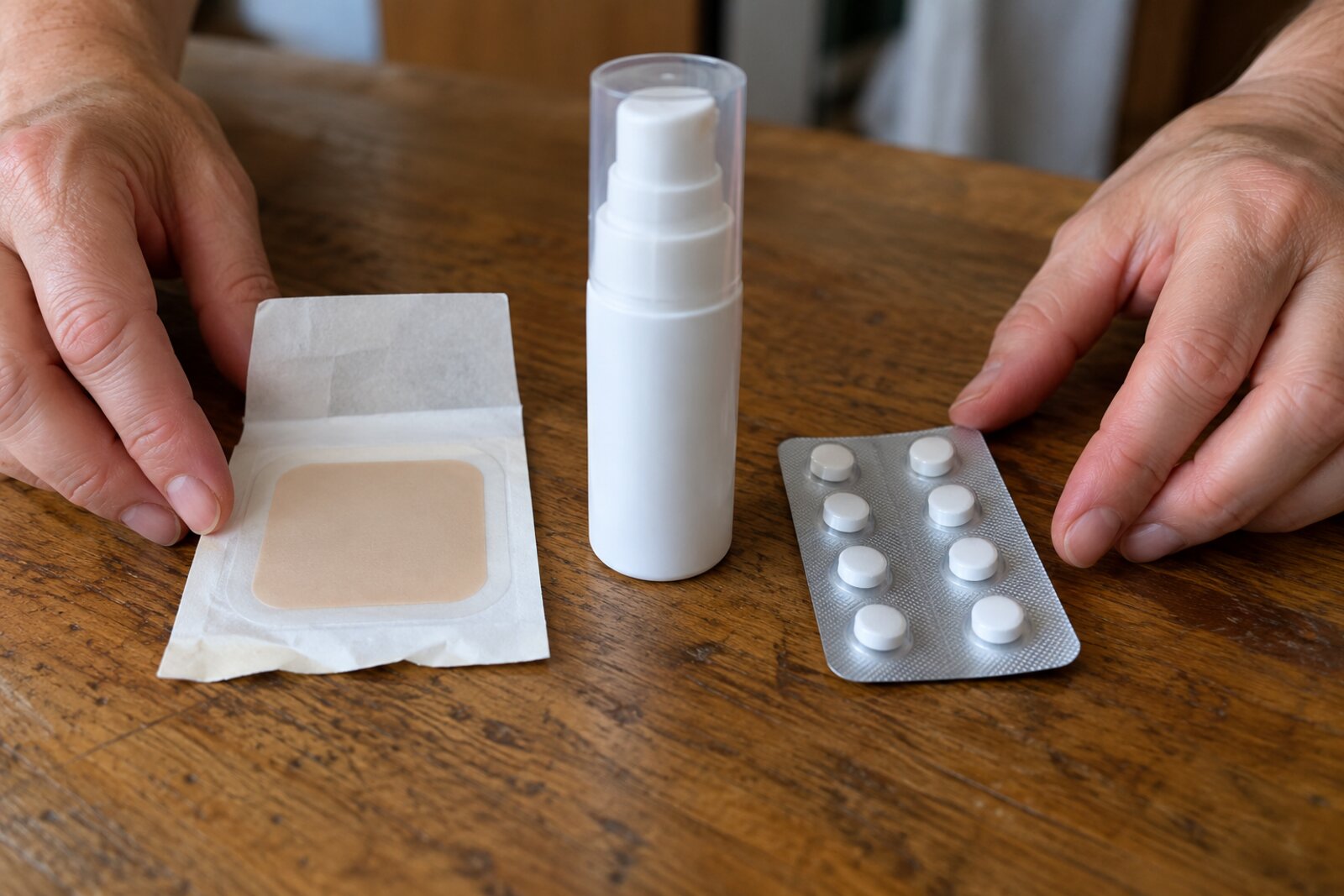
Ask whether the hormone is taken by mouth, applied to the skin, or given another way. Then ask why that form was chosen for you. The answer tells you what a normal routine looks like.
How often?
Ask how often it is used and what to do if you miss a use. Write the answer down so you do not rely on memory.
Track what the form changes
Daily routine
Note how easy or hard the routine is to keep. A routine that is hard to keep is worth reporting early, since a provider can only adjust a plan they know is not working.
Skin, comfort and timing
Note anything you notice where or when the hormone is used, and the date it first appeared. A small local change recorded on day two is easier to act on than a vague memory of it in week six.
Read about the specific hormone
Public pages describe hormones one at a time. One clinic's overview of bioidentical hormones covers the term. For one specific hormone, the same clinic's page on progesterone covers its natural function, levels and side effects.
Compare more than one source
Read a clinic's page on hormone replacement therapy for menopause next to a menopause society's hormone therapy page. If a form is described differently in the two, bring the difference to your provider.
Asking about the form, then watching two weeks
Ask which form is proposed and why, track the first two weeks closely, and report anything that makes the routine hard to keep. Public pages describe the routine each delivery form creates, and the choice of form stays with your provider.